
by Audre Knepp, SACReD’s Collective Rising Summer Intern
I’ve spent the first two decades of my life navigating the intricacies of White Christian Nationalism as a young, mixed-ethnicity woman. I remember my mother once telling me not to worry after I was caught speeding, comforting me with the idea that my “white passing” skin tone might shield me. A moment that forced me to realize how much my tone and appearance could dictate my safety and path in life. Similarly, during religious education growing up, the girls were taught traditional roles of motherhood while the boys were pulled aside to learn about career building, leaving me to wonder if I would ever be equipped to carve out my own professional future. These experiences have taught me a great deal about who I am and how to invite curiosity into my life. Still, as a rising university senior, I know I’m young, and I’m actively learning the art of carving out space in high-tension discussions.
In theory, I’ve got it down to a science. I practice my best arguments in the shower, where obviously, I win every single time. It’s glorious!
Then real life happens.
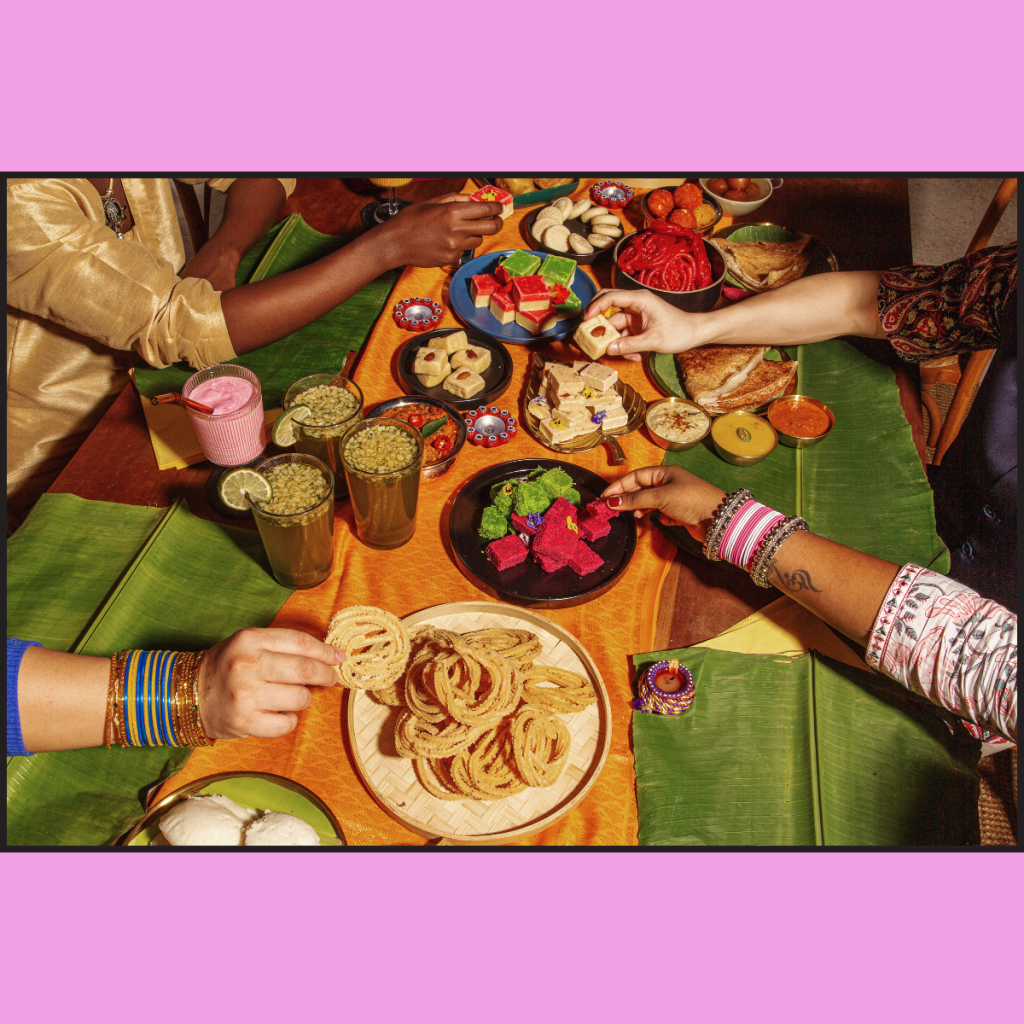
Suddenly, I’m at family dinner, innocently talking about my career aspirations with my grandparents, and within three minutes, we’re somehow fighting a war over birth control. As I try to explain the difference between White Christian Nationalism and my great-grandma’s own scriptures, my dad and grandpa launch into a debate on immigration. Meanwhile, my aunts are giggling at how terribly I’ve directed the conversation, and I’m left sitting there—shower-honed debate skills completely forgotten—feeling utterly overwhelmed.
As a young adult, raised in the Bible Belt, navigating today’s world of loud online opinion pieces can feel like too much to handle. From scrolling reels on transgender rights and equality to Turning Point USA’s largest convention yet where everyday items such as lipgloss and coffee were politicized, I get easily exhausted (Peltz, 2026). Every choice I make feels easy to judge and being passionate about my political left leaning views, I want to ensure how I appear in the world reflects these values. However, feelings get so complicated when I have to think about all of these little things such as choosing the right brands and interacting with the right online social media presences. Divides feel so giant. When these moments happen, it’s so easy to get defensive and believe that common ground is miles away. So how do I make the disconnect feel manageable and inline with my big feelings?
Every choice I make feels easy to judge and being passionate about my political left leaning views, I want to ensure how I appear in the world reflects these values. However, feelings get so complicated when I have to think about all of these little things such as choosing the right brands and interacting with the right online social media presences. Divides feel so giant. When these moments happen, it’s so easy to get defensive and believe that common ground is miles away.
But before I can even try to connect, I often have to remind myself to stand firm on my own ground. I’ve watched reproductive rights slip through our fingers here in the South. I’ve read about the history of medicaid disparities across state lines and the stories of mothers who came before me who had to navigate these systems to get adequate healthcare. I’ve sat heartbroken over the violence that Dr. James Marion Sims enacted on Anarcha, Betsy, and Lucy as the experimental beginnings of gynecology, and I’ve journaled about my feelings on Adriana Smith’s gut-wrenching narrative told by the media. When navigating these stories I root myself in the belief that all creation is good, that our bodies, our sexualities, and our reproductive journeys are sacred diversity in action. When I remember that my feelings are proponents of good, and that moral common ground is closer than I fear, I can step into these tough conversations with a heart full of imagination for productive conversation rather than fear.
And that is when I jump into a stream of inquiry. My favorite guest to invite to dinner is curiosity.
Instead of throwing rigid facts back and forth, I put effort into being an enthusiastic learner. I want to dig into their arguments with giant loops of imagination. I start asking big, heartfelt questions: “Why do you believe that? How does your relationship with spirituality guide you there?” Others answers to these questions I find are often insightful, refreshingly different, and incredibly well oriented. If I believe human beings are hardwired for love and social connection; if I assume the people across the table have love in their hearts; the whole conversation shifts. We might find our common ground is so much closer than we think. We might both fiercely believe in the importance of protecting human life and bodily autonomy, even if we have completely different ideas of what categorizes a body or how our scriptures back it up.
If I believe human beings are hardwired for love and social connection; if I assume the people across the table have love in their hearts; the whole conversation shifts. We might find our common ground is so much closer than we think. We might both fiercely believe in the importance of protecting human life and bodily autonomy, even if we have completely different ideas of what categorizes a body or how our scriptures back it up.
These conversations require a mountain of compassion I didn’t know I held. Introducing the idea of abortion and birth control to a family I know will fight me with their scripture and religious teachings requires I have sympathy for their right to believe as they wish. It requires me to show kindness and openness in understanding where they are coming from. To open a channel of communication and maintain a two way peaceful relationship. But when I practice approaching others with sincere curiosity instead of judgment, I find we can receive each other’s stories free from shame, stigma, and dogma.
So, next time family dinner turns into a political battlefield, I don’t want to retreat. I want to ground myself in what I have identified as my moral ground, look across the table with love, and launch a conversation grounded in curiosity. I open my mind to new teachings on differing religions, I sit closely and look attentively, showing active participation and inquiry. I track what information they are providing me, cataloging what I agree with and acknowledging for myself what I disagree with. Noting what I want to bring up without interrupting ideas others are passionately sharing with me.
Sometimes the hardest story to affirm is our own. Yet, if I believe my own complex, mundane, or painful stories deserve to be treated with tenderness, I must be called to extend that same tenderness to those whose worldviews stand in stark contrast to mine. The reality is that the way I live, and the beliefs I hold dear, can directly contradict or even disrupt how someone else understands life.
Sometimes the hardest story to affirm is our own. Yet, if I believe my own complex, mundane, or painful stories deserve to be treated with tenderness, I must be called to extend that same tenderness to those whose worldviews stand in stark contrast to mine. The reality is that the way I live, and the beliefs I hold dear, can directly contradict or even disrupt how someone else understands life. My choices as a woman, or my perspective on complex issues like abortion, may run completely counter to the sacred lessons of another community’s faith. But, I believe true empathy and curiosity requires reciprocity. If I ask others to make space for my truth and honor its weight, I must be willing to lean into the emotional and physical gravity of theirs. Even when our core realities collide, curiosity remains the necessary bridge.
And if everybody truly is inherently good and sacred, how does that change the way I look at others around the dinner table?
Additional References:
González-Ramírez, A. (2025). Adriana Smith’s pregnancy and Georgia’s brutal abortion law. In The Cut. https://www.thecut.com/article/adriana-smith-pregnancy-brain-dead-georgia-abortion-law.html
Joel Bervell, Jody Becker, Mickey Capper, & Bethanne Fox. (2024, April 19). On the need to reclaim gynecology’s troubled legacy [Broadcast]. In The Dose. https://doi.org/10.26099/7fmf-fz91
Peltz, M. (2026, June 16). TPUSA women’s leadership summit: Inside the conference recruiting young women to be tradwives. Abortion, Every Day. Substack.Com. https://jessica.substack.com/p/tpusa-gen-z-women-tradwife?r=21sfry&utm_medium=ios